EDWARDS of HALIFAX BINDING
Book Description
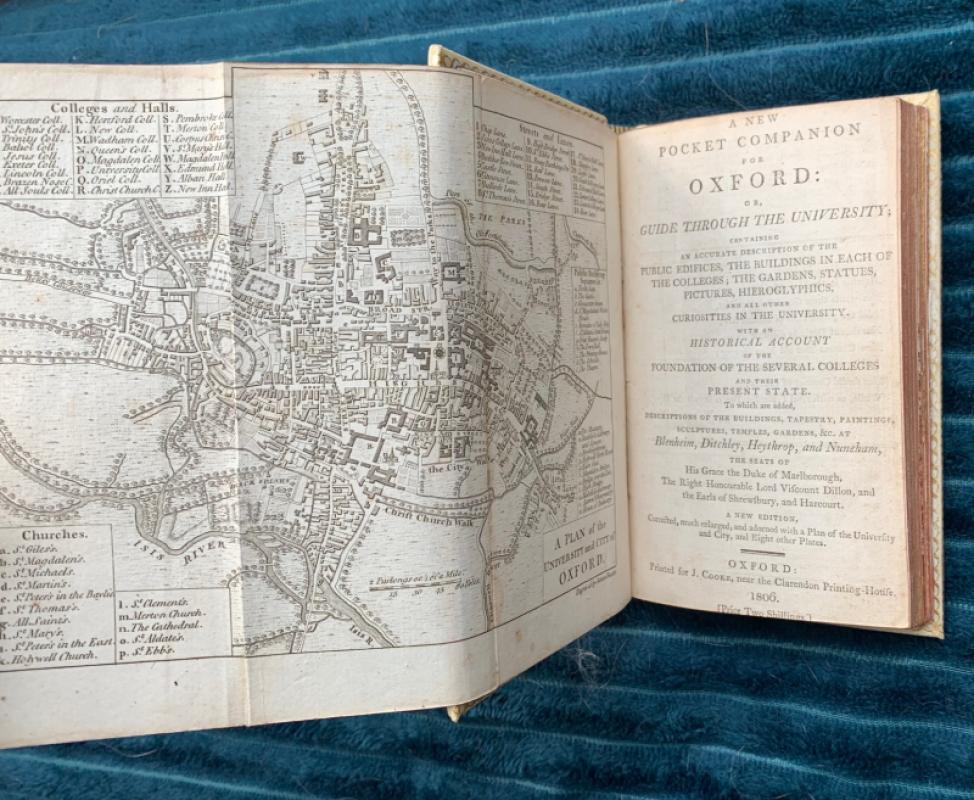
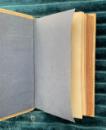
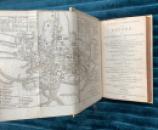
EDWARDS of HALIFAX BINDING A New Pocket Companion for Oxford: or, Guide through the University; containing an accurate description of the public edifices, the buildings in each of the colleges; the gardens, statues, pictures, hieroglyphics, and all the curiosities... To which are added, descriptions of... Blenheim, Ditchley, Heythrop, and Nuneham... Oxford, Printed for J. Cooke, near the Clarendon Printing-House, 1806
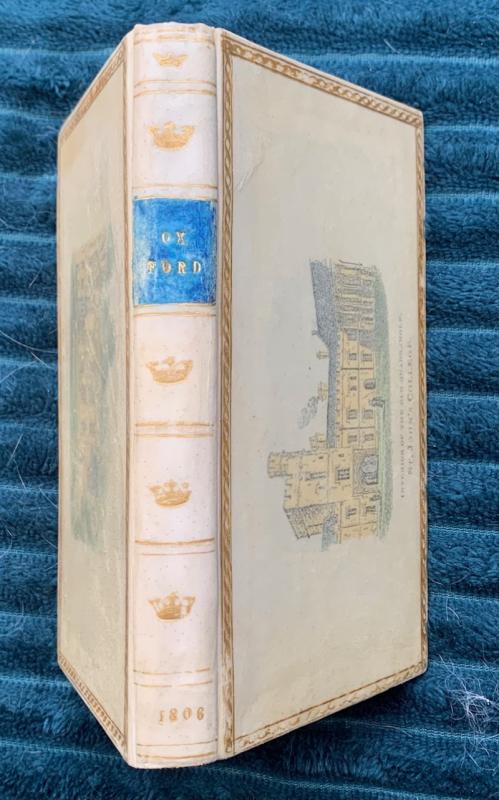
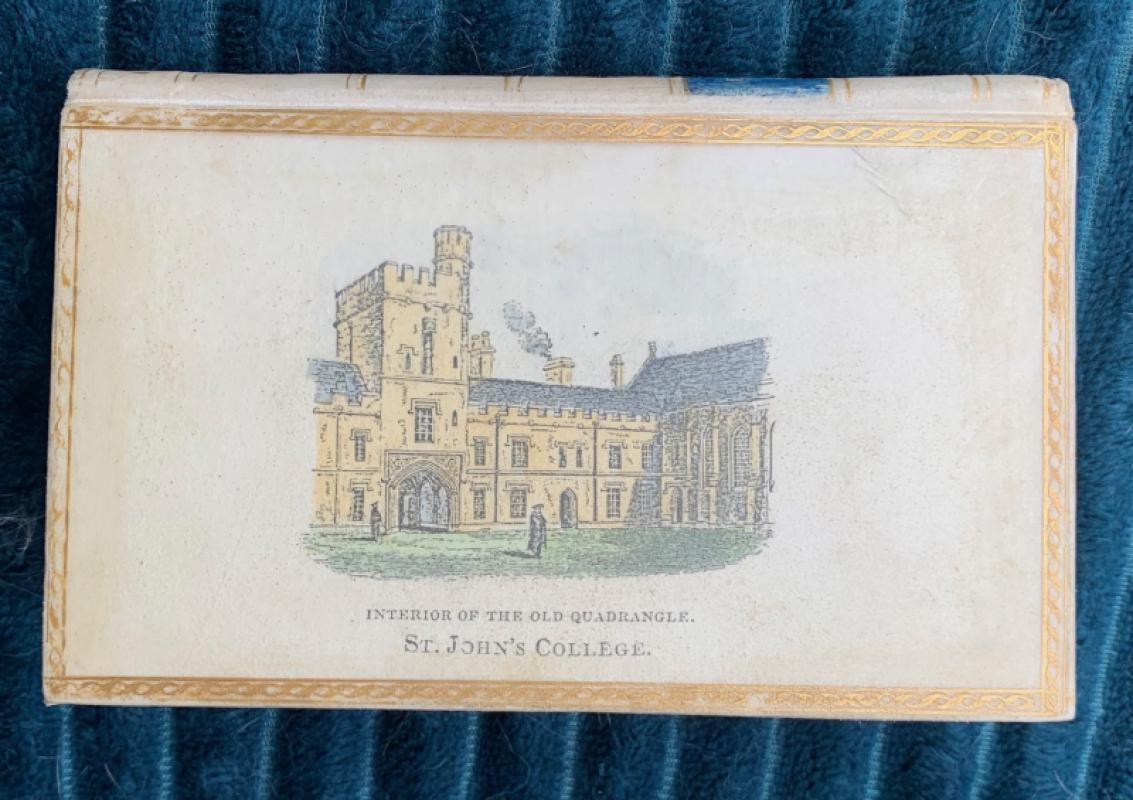
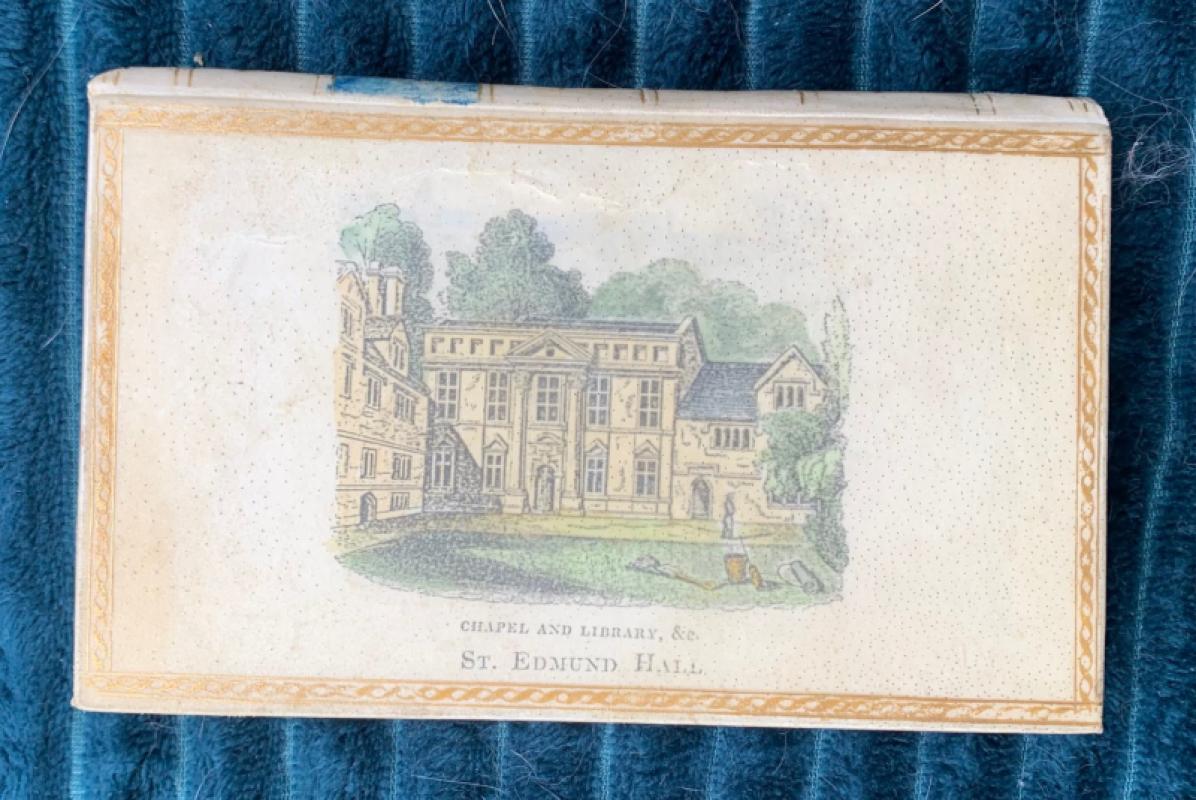
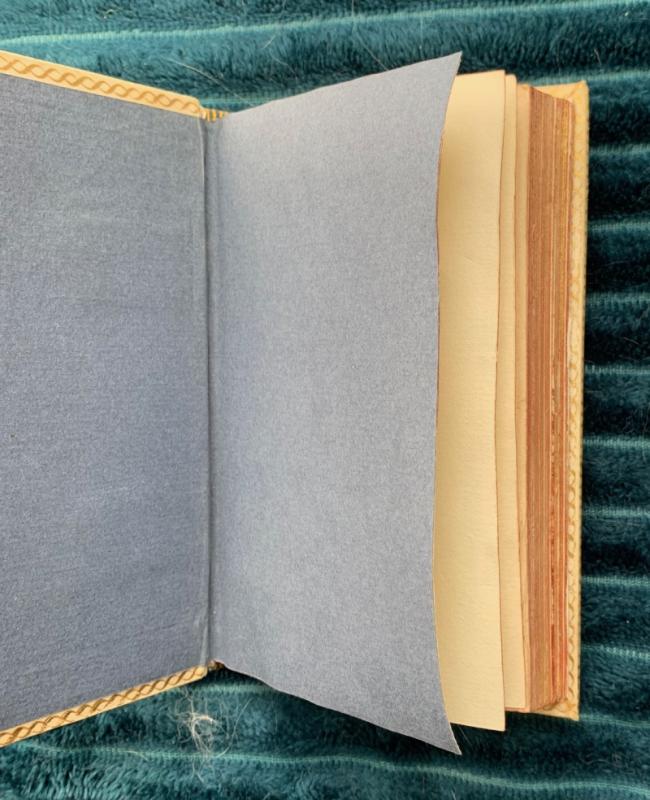
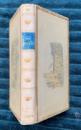
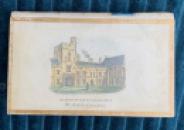
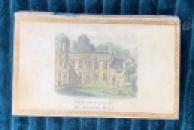
12mo, pp. [4], 163, [1, colophon], folding map frontis & 8 plates (7 steel engraved, 1 wood engraved) as called for on the t.p., full vellum, covers with gilt borders, with central engraved, hand-coloured, Oxford scenes, spine ruled in gilt with crown ornament in compartments, gilt lettered against a hand-coloured blue ground, a.e. gilt over red
Dealer Notes
Probably bound ca, 1820, when the firm of Edwards of Halifax was under the aegis of Richard Edwards, in London, (1768-1827) or Thomas Edwards (1762-1834), in Halifax.
In 1785 James Edwards was granted specification No. 1462 for Embellishing Books bound in Vellum, by making Drawings on the Vellum which are not liable to be Defaced but by Destroying the Vellum itself.
Although Edwards of Halifax bindings more usually have drawings showing through the vellum. an excerpt of the patent, relevant here, tells us that: “Copperplates may also be impressed, so as to have a similar effect."
Therefore, although unsigned, and although the finishing is not top-notch, the technique and the use of the signature blue for the label (instead of an actual leather label) are fairly emphatic indicators that this binding comes to us from the closing years of the bindery and its outlying craftsmen. The condition of the binding and the contents is virtually mint; the text and plates close-cut in places, touching letters, etc.
In 1785 James Edwards was granted specification No. 1462 for Embellishing Books bound in Vellum, by making Drawings on the Vellum which are not liable to be Defaced but by Destroying the Vellum itself.
Although Edwards of Halifax bindings more usually have drawings showing through the vellum. an excerpt of the patent, relevant here, tells us that: “Copperplates may also be impressed, so as to have a similar effect."
Therefore, although unsigned, and although the finishing is not top-notch, the technique and the use of the signature blue for the label (instead of an actual leather label) are fairly emphatic indicators that this binding comes to us from the closing years of the bindery and its outlying craftsmen. The condition of the binding and the contents is virtually mint; the text and plates close-cut in places, touching letters, etc.
Author
[ANON]
Condition
excellent
Other books
If you liked the book you've just seen, you might be interested in other books from the same dealer below.
An Exposition of the Dominical Epistles and Gospel...
BOYS (John)
London, Felix Kyngston,
£175.00
Offered by Ian Marr Rare Books
Venus guiding Æneas and the Trojans to the Latin s...
[AMERICAN ARTIST] PAGE (William)
[New York,
£95.00
Offered by Ian Marr Rare Books

An Essay on the Nature, Design, and Origin, of Sac...
[SYKES (Arthur Ashley)]
London, Knapton,
£325.00
Offered by Ian Marr Rare Books
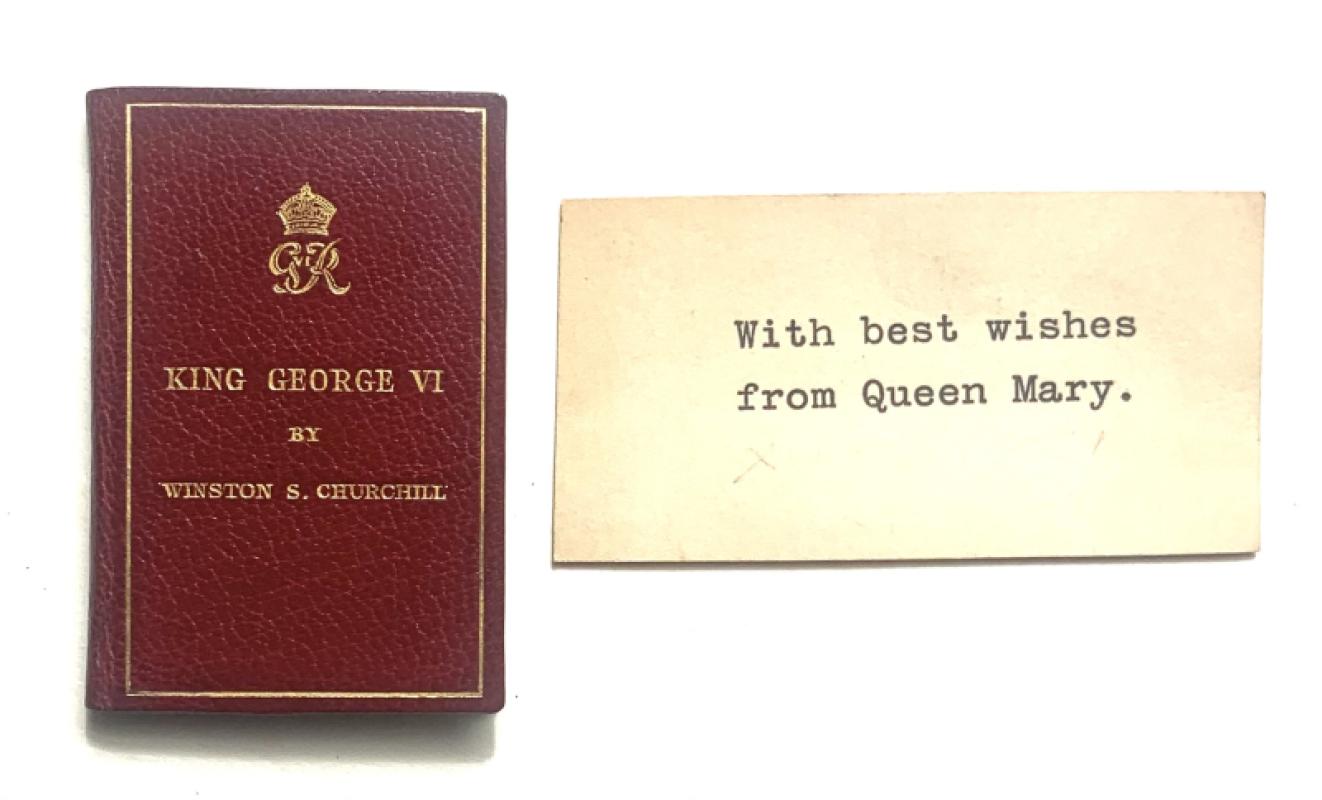
King George VI: The Prime Minister's Broadcast, Fe...
CHURCHILL (Winston Spencer)
Worcester, Achille J. St. Onge Press
Reserved
Offered by Ian Marr Rare Books
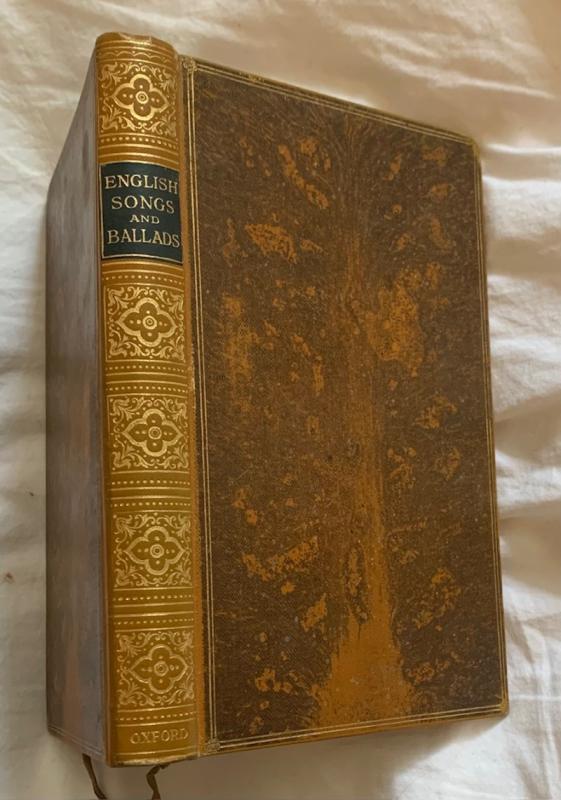
[UNUSUAL FAUX-LEATHER BINDING] English Songs and B...
CROSLAND (T.W.H.)
O.U.P., Humphrey Milford,
£50.00
Offered by Ian Marr Rare Books
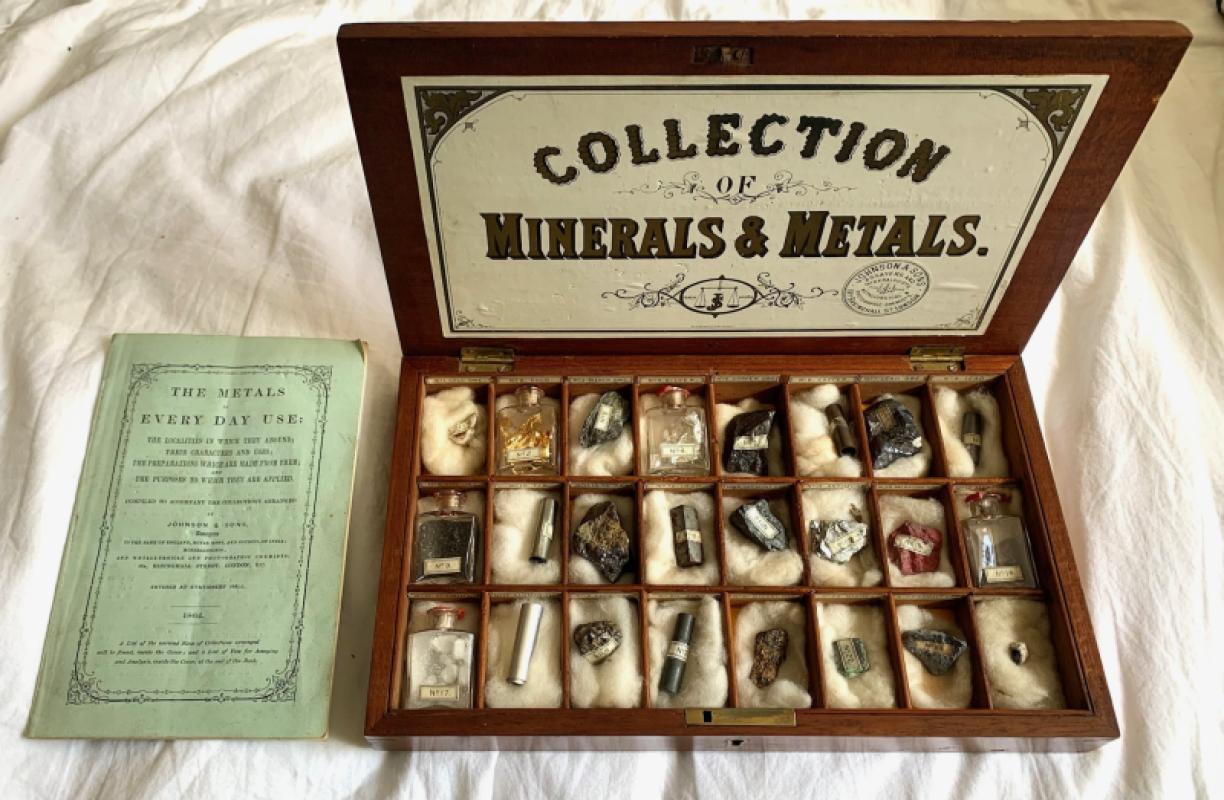
The Metals of Every Day Use / Collection of Minera...
JOHNSON & Sons
London
£2750.00
Offered by Ian Marr Rare Books
Friends of the PBFA
For £10 get free entry to our fairs, updates from the PBFA and more.
Please email info@pbfa.org for more information