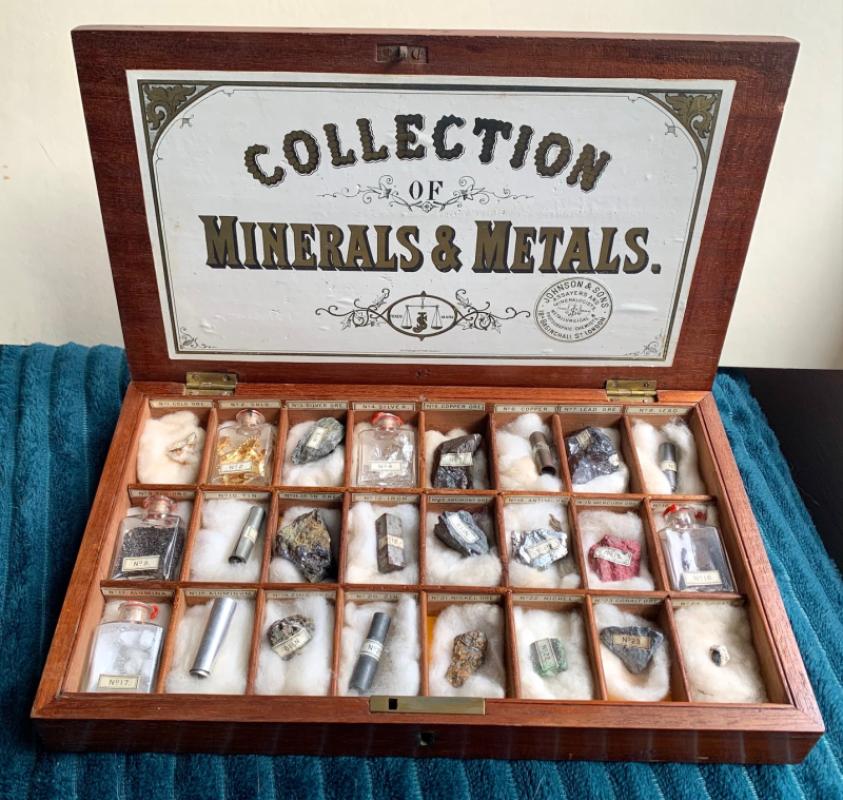
The Metals of Every Day Use / Collection of Minerals & Metals [specimen box]
Book Description
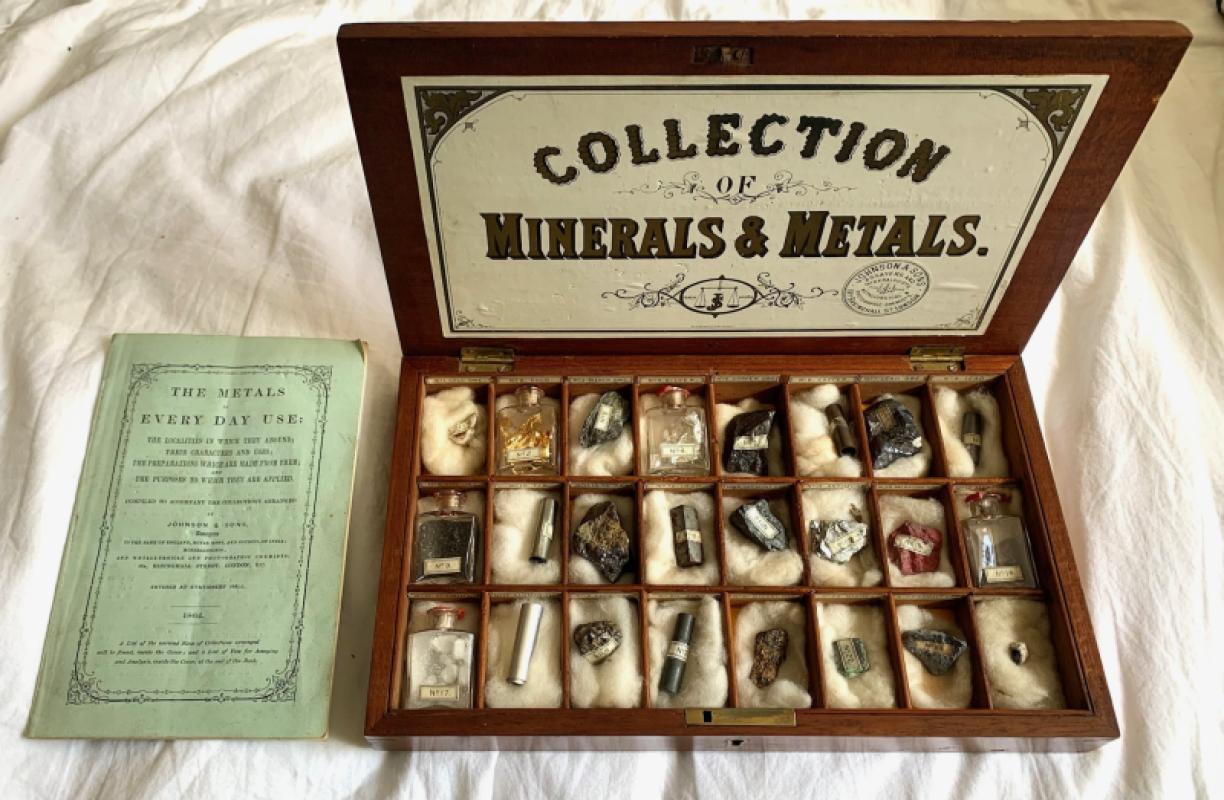
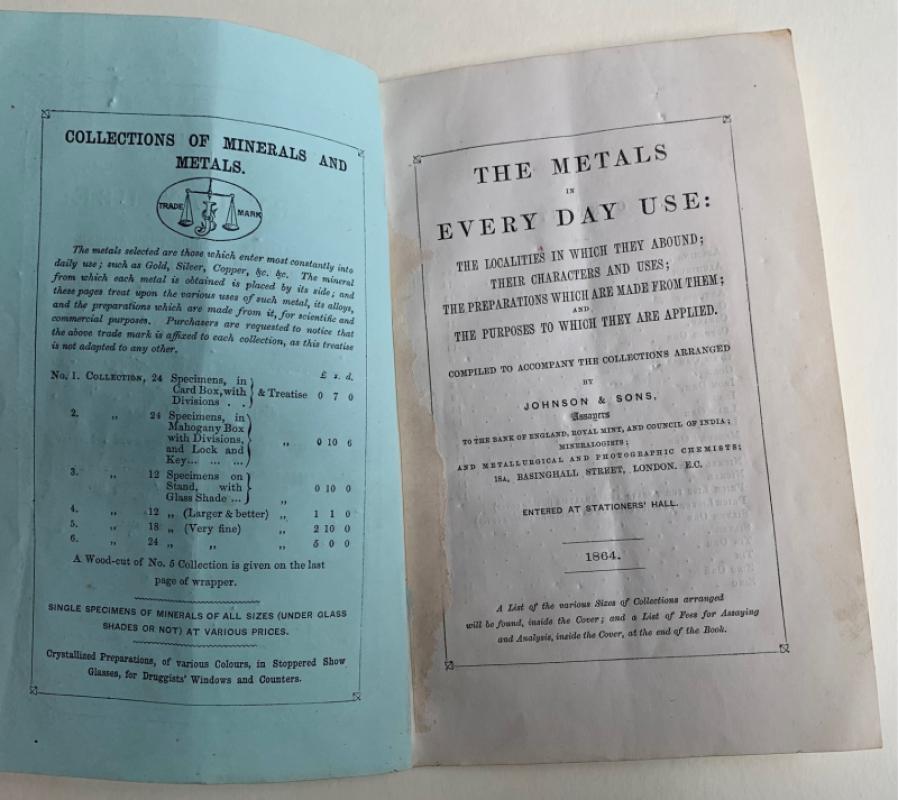
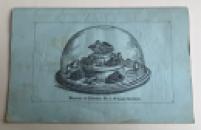
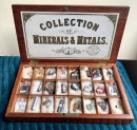
JOHNSON & Sons The Metals of Every Day Use: The Localities in which they abound; their character and uses; the Preparations which are made form them; and the Purposes towhich they are applied. Compiled to Accompany the Collections Arranged by JOHNSON & SONS, Assayers to the Bank of England, Royal Mint, and Council of India; Mineralogists; and Metallurgical and Photographic Chemists: 18A Basinghall Street, London, E.C. / Collection of Minerals & Metals [specimen box] [London] 1864 £2,750
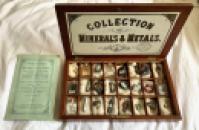
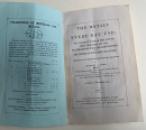
1) 8vo pamphlet, pp. 16, pale blue printed wrappers, 2 (of 3?) tipped in adverts
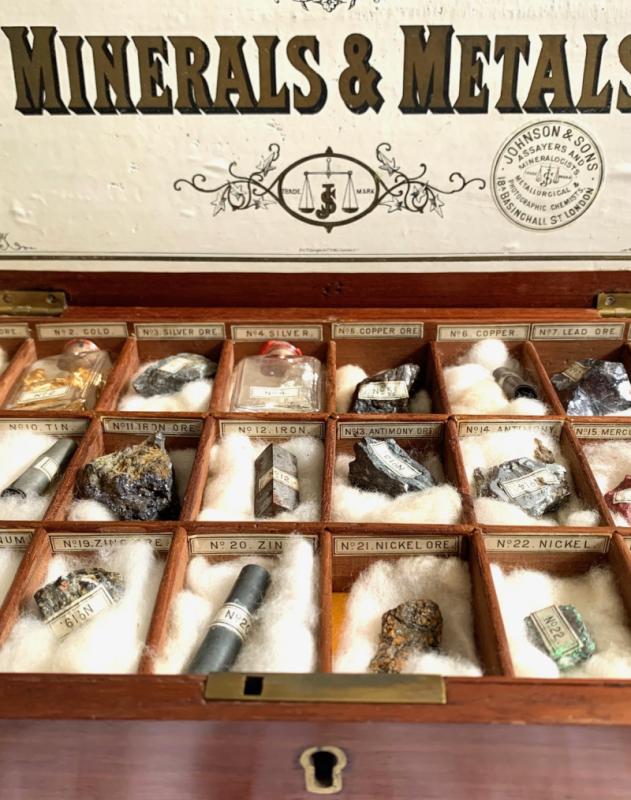
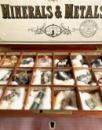
2) mahogany box with 24 oblong compartments with wooden dividers, containing 24 samples with tiny number labels (3 labels missing), including 5 specimen bottles with corks & wax seals (seals chipped but intact), each compartment with its own numbered and titled label affixed to the divider. Large chromolithograph title label by Robt. W. Sprague, London, E.C., pasted to the lid underside, with tondo printed label for Johnson & Sons affixed to that. The box (without key) measuring 7 x 12 inches, 1.75 inches deep.
Dealer Notes
An extraordinary survival in terms of condition and completeness, of both the box and accompanying pamphlet. We have found no other examples of either the pamphlet or the boxed collection, let alone the two together.
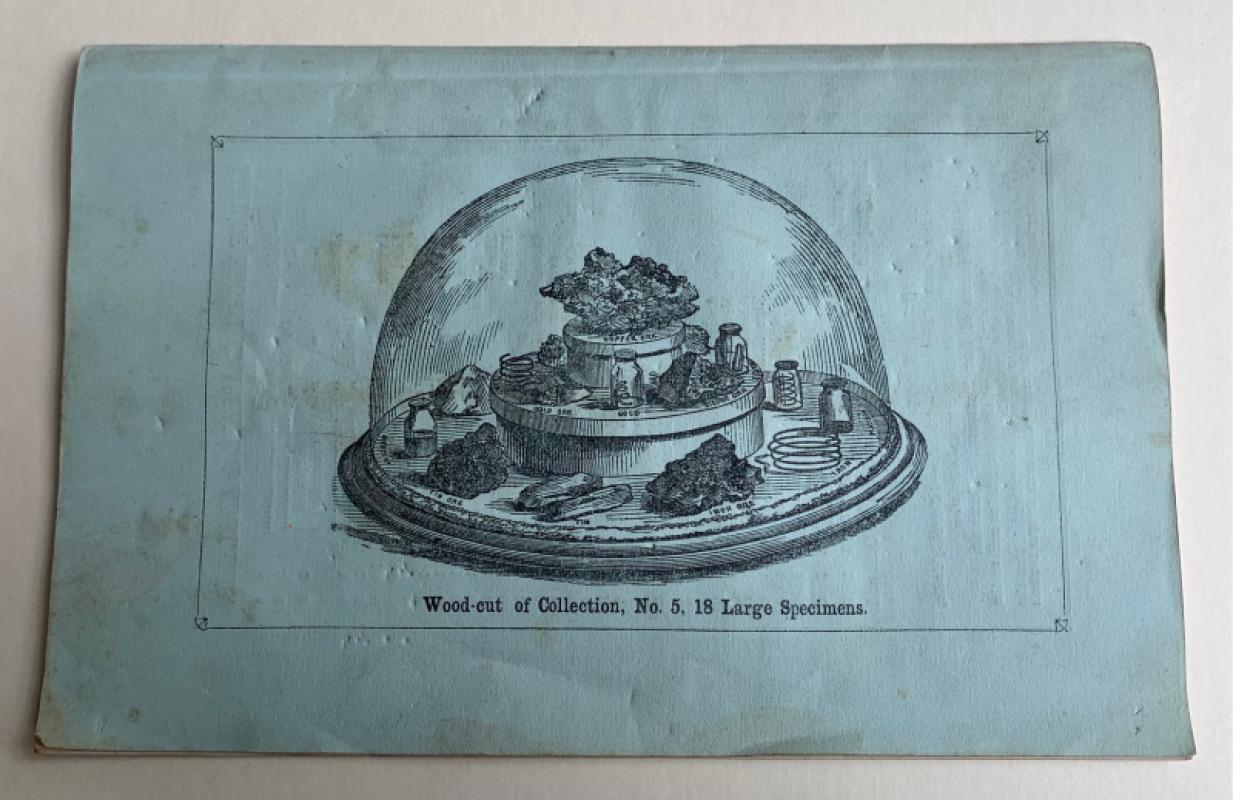
The pamphlet begins, verso the wrapper, with a list of the 6 collections available: No.1 in a cardboard box; No.2, (as with ours) in an upmarket mahogany box; Nos. 3-6 with the specimens on stands under a “glass shade.” No. 5 collection is illustrated on the back wrapper.
The rest of the pamphlet details the metals in order of importance, giving history / localities where found, their uses, etc. Hence, under “Specimen No.1” and “Specimen No.2” we have Gold Ore / Gold, “Found in Australia (1851), California (1847), [etc.]... The gold contained in spoiled photographic prints, cuttings from the edges of portraits, &c., may all be recovered by the art of the Chemist [i.e. Johnson], and made available again, at a comparatively small cost.... It is the first metal mentioned in the Bible...” Johnson’s explanations of the metals generally detail, where appropriate, their use in the photographic and other processes.
This is appropriate because a large part of Johnson & Sons activities, aside from their role as independent and accredited assayers, were as retailers of equipment and chemicals, etc., used in photography; for example, providing chemicals for the Fox-Talbot calotype photographic process from around 1839. A directory of 1865 notes the firm as "assayers to the Bank of England and Her Majesty's Mint, assayers of bullion, metals, minerals, pigments etc., refiners of platinum, manufacturers of nitrate of silver and other photographic chemicals (wholesale), manufacturers of bullion and other standard weights,chemical apparatus etc. Importers and collectors of minerals and mineralogical specimens".
John Grove Johnson I (1833-1908) entered the family business in 1849. In 1860, he become a liveryman of the Goldsmiths Company. He lived in Southwood Court, in London’s Highgate, from 1877 until his death in 1908. Allegedly, Johnson was a descendant of the messenger who had alerted Robert the Bruce - who was staying in what was the Earl of Gloucester’s hunting lodge, Highgate, in 1305 - about his impending arrest by Edward I.
The pamphlet begins, verso the wrapper, with a list of the 6 collections available: No.1 in a cardboard box; No.2, (as with ours) in an upmarket mahogany box; Nos. 3-6 with the specimens on stands under a “glass shade.” No. 5 collection is illustrated on the back wrapper.
The rest of the pamphlet details the metals in order of importance, giving history / localities where found, their uses, etc. Hence, under “Specimen No.1” and “Specimen No.2” we have Gold Ore / Gold, “Found in Australia (1851), California (1847), [etc.]... The gold contained in spoiled photographic prints, cuttings from the edges of portraits, &c., may all be recovered by the art of the Chemist [i.e. Johnson], and made available again, at a comparatively small cost.... It is the first metal mentioned in the Bible...” Johnson’s explanations of the metals generally detail, where appropriate, their use in the photographic and other processes.
This is appropriate because a large part of Johnson & Sons activities, aside from their role as independent and accredited assayers, were as retailers of equipment and chemicals, etc., used in photography; for example, providing chemicals for the Fox-Talbot calotype photographic process from around 1839. A directory of 1865 notes the firm as "assayers to the Bank of England and Her Majesty's Mint, assayers of bullion, metals, minerals, pigments etc., refiners of platinum, manufacturers of nitrate of silver and other photographic chemicals (wholesale), manufacturers of bullion and other standard weights,chemical apparatus etc. Importers and collectors of minerals and mineralogical specimens".
John Grove Johnson I (1833-1908) entered the family business in 1849. In 1860, he become a liveryman of the Goldsmiths Company. He lived in Southwood Court, in London’s Highgate, from 1877 until his death in 1908. Allegedly, Johnson was a descendant of the messenger who had alerted Robert the Bruce - who was staying in what was the Earl of Gloucester’s hunting lodge, Highgate, in 1305 - about his impending arrest by Edward I.
Author
JOHNSON & Sons
Date
1864
Publisher
London
Condition
excellent
Other books
If you liked the book you've just seen, you might be interested in other books from the same dealer below.
A New Song, called Jemmy’s Lament, Or the Turn-out...
[IRELAND]
not stated
£65.00
Offered by Ian Marr Rare Books
An Exposition of the Dominical Epistles and Gospel...
BOYS (John)
London, Felix Kyngston,
£175.00
Offered by Ian Marr Rare Books
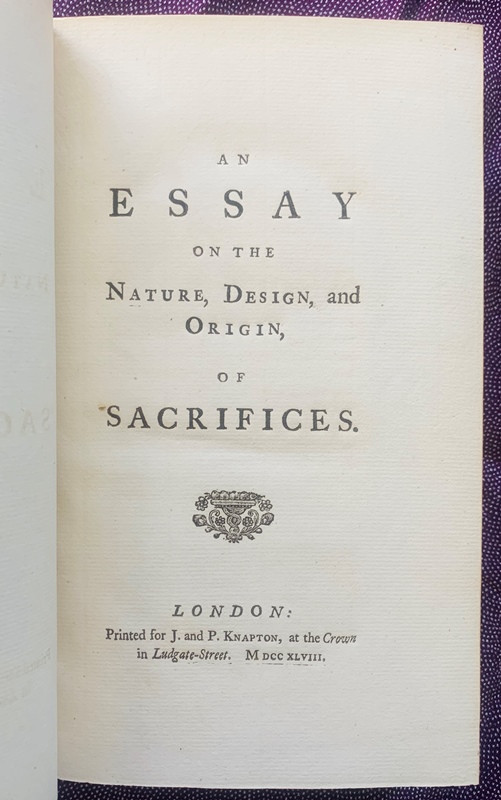
An Essay on the Nature, Design, and Origin, of Sac...
[SYKES (Arthur Ashley)]
London, Knapton,
£325.00
Offered by Ian Marr Rare Books
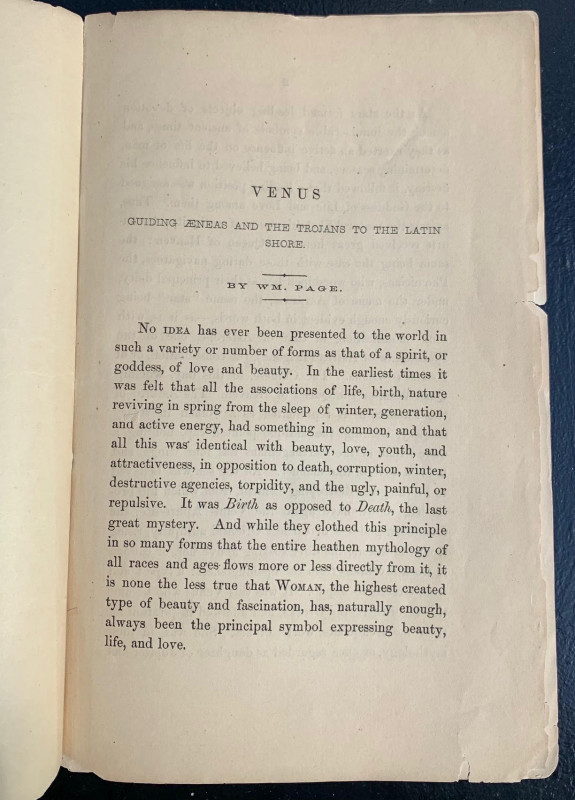
Venus guiding Æneas and the Trojans to the Latin s...
[AMERICAN ARTIST] PAGE (William)
[New York,
£95.00
Offered by Ian Marr Rare Books
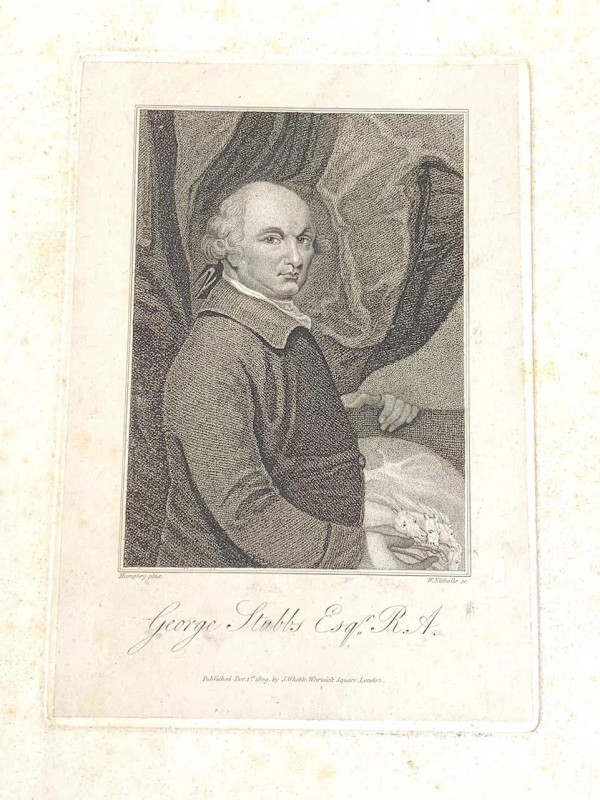
“George Stubbs Esq., R.A.”
HUMPHRY pinx. W. NICHOLLS sc.
London, J. Wheble,
£15.00
Offered by Ian Marr Rare Books
Friends of the PBFA
For £10 get free entry to our fairs, updates from the PBFA and more.
Please email info@pbfa.org for more information