An Account of Constantinople and the Turkish Government.
Book Description
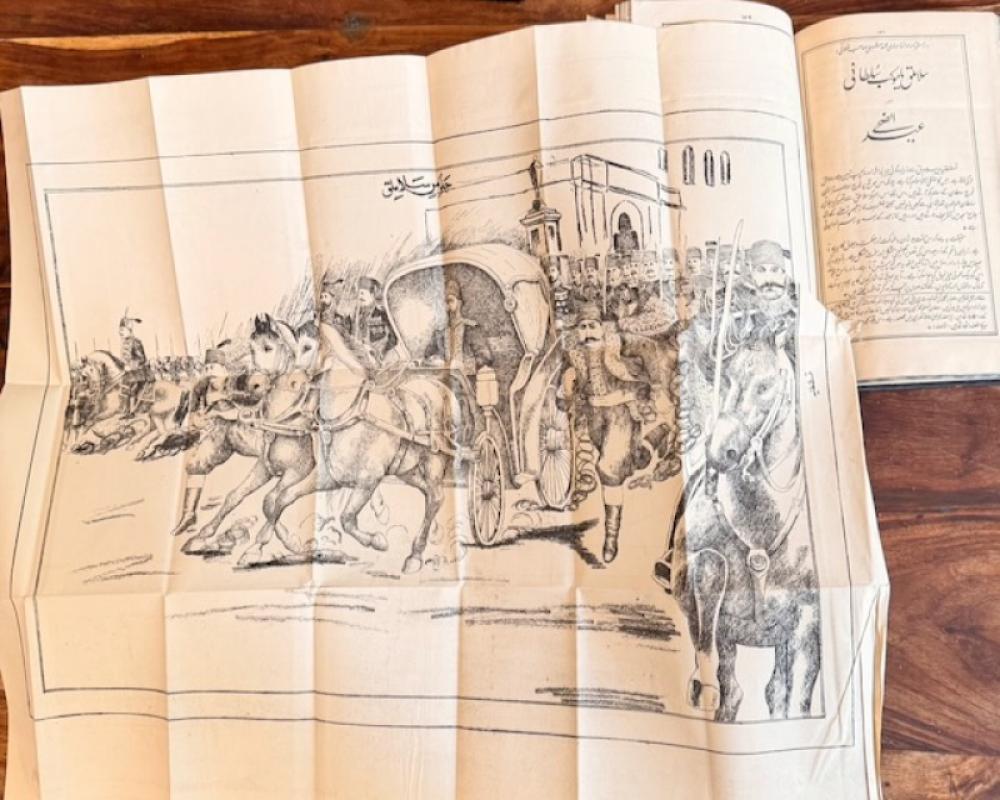
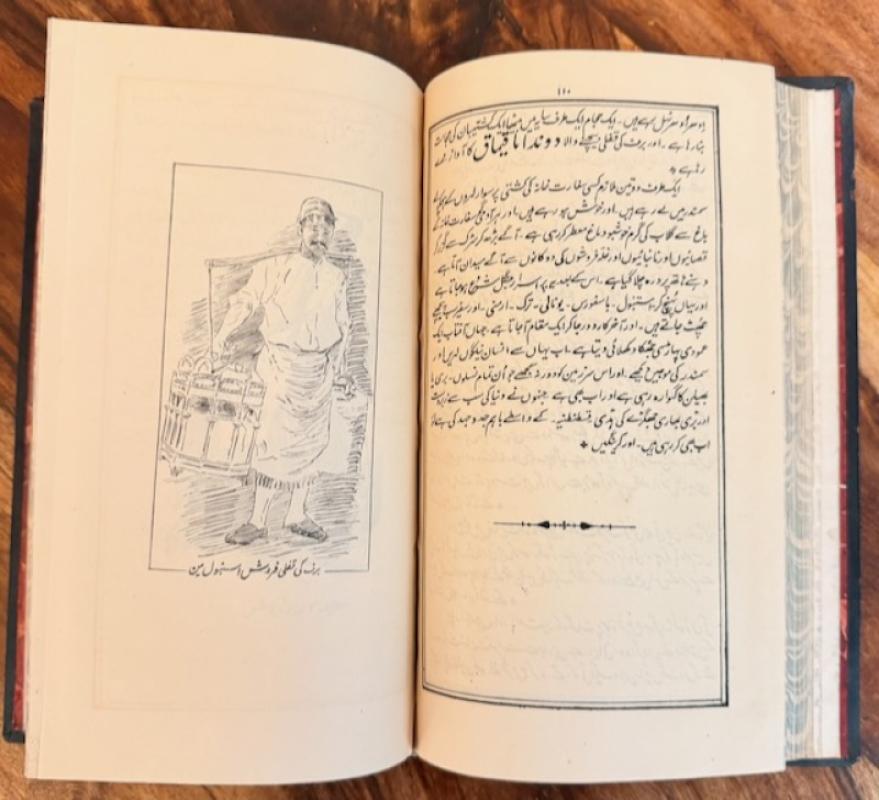
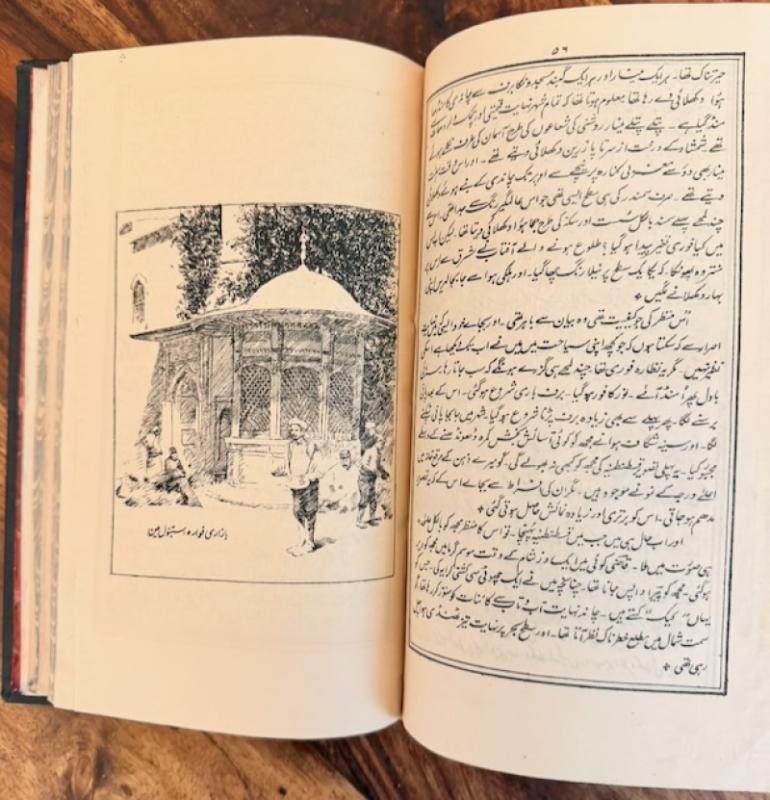
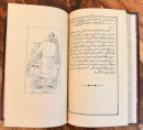
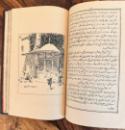
First edition. Urdu, one fold-out and 17 single-page lithographic illustrations with captions. Text block trimmed, clipping the border of a single illustration (but with no loss of the image), neat publisher's stamps to the right-facing original wrapper and left-facing endpaper, m.s. ownership inscription to the right facing endpaper, single English m.s. note on p.2. Foldout illustration creased and misfolded at the binding, two closed tears encroaching onto the image (one with an old tape repair to the verso), closed 3cm tear along a fold line unaffecting the image. Bound into a later [c.1920] Indian calf binding, additional crimson marbled endpapers bound around the original yellow printed wrappers, gilt double-rectangles to the boards and the title, owner's name and raised bands gilded onto the spine: spine lightly worn, some nicks and light wear along the extremities. In very good condition. [2 (blank)], [1(wrapper)], 192, [1 (wrapper)], [2 (blank)]pp. Lahore; Fazl al-Din, bookseller of the Kashmiri Bazar. 1897.
Dealer Notes
A fascinating study of Istanbul and the Ottoman Empire by a Punjabi author. It includes charming, well-executed illustrations of Istanbul's sites and locals. These include a striking foldout lithographic print of the Sultan and his cavalcade. The work shows how Muslim-Indians were using the lives of Muslims in the Ottoman Empire to assess their standards of living under British rule.
The book commences by discussing the history and key sites of Istanbul. This includes a chapter about the Aya Sophia, a focal point of Muslim interest in the city. Ali Khan proceeds to outline the Ottoman empire’s system for education. These are divided between primary, secondary and higher stages. Further passages include the practices of Eid, a copy of a document relating to Ottoman reforms and the transcript of a speech that Khan gave in London.
Curiously, Ali Khan also includes a list of bookstores around Istanbul. This provides a rare insight into the Turkish book trade in Istanbul at the turn of the century.
In the 1890s, Indian authors began wanting to produce travelogues free from Western bias. An example of this was Shibli Nomani (1857-1914) who wrote about his travels to Izmir in 1892. Navaz highlights an example of this bias, noting that Nomani recalled the increase in the number of schools in Turkey from 94 to 405, and wondered why European writers chose to ignore such developments.
Ali Khan’s appears to have shared Nomani’s outlook about the Ottoman Empire. The offered book contains a chapter, about the rituals related to Eid al-Fitr, copied and attributed to Nomani’s travelogue.
Nawazish Ali Khan belonged to one of the ruling families of the Lahore district, becoming the Nawab following his father’s death in 1866. He was staunchly supportive of the British rule in India and received many recognitions for Anglo-Indian service. This included Ali Khan being made a Knight of the Indian Empire in 1890.
Ali Khan was also recorded as being philanthropic. He funded the Maktab at Ali Abad and gave stipends to its 20 orphaned pupils. This likely explains his interest in the educational reforms taking place in the Ottoman Empire.
Rare. This cataloguer locates a single holding at the BL (which is listed in the South Asia Union Project).
The book commences by discussing the history and key sites of Istanbul. This includes a chapter about the Aya Sophia, a focal point of Muslim interest in the city. Ali Khan proceeds to outline the Ottoman empire’s system for education. These are divided between primary, secondary and higher stages. Further passages include the practices of Eid, a copy of a document relating to Ottoman reforms and the transcript of a speech that Khan gave in London.
Curiously, Ali Khan also includes a list of bookstores around Istanbul. This provides a rare insight into the Turkish book trade in Istanbul at the turn of the century.
In the 1890s, Indian authors began wanting to produce travelogues free from Western bias. An example of this was Shibli Nomani (1857-1914) who wrote about his travels to Izmir in 1892. Navaz highlights an example of this bias, noting that Nomani recalled the increase in the number of schools in Turkey from 94 to 405, and wondered why European writers chose to ignore such developments.
Ali Khan’s appears to have shared Nomani’s outlook about the Ottoman Empire. The offered book contains a chapter, about the rituals related to Eid al-Fitr, copied and attributed to Nomani’s travelogue.
Nawazish Ali Khan belonged to one of the ruling families of the Lahore district, becoming the Nawab following his father’s death in 1866. He was staunchly supportive of the British rule in India and received many recognitions for Anglo-Indian service. This included Ali Khan being made a Knight of the Indian Empire in 1890.
Ali Khan was also recorded as being philanthropic. He funded the Maktab at Ali Abad and gave stipends to its 20 orphaned pupils. This likely explains his interest in the educational reforms taking place in the Ottoman Empire.
Rare. This cataloguer locates a single holding at the BL (which is listed in the South Asia Union Project).
Author
ALI KHAN (Navazish)
Date
1897.
Binding
Indian calf binding.
Condition
very good.
Price: £3750.00
Offered by Roland Belgrave Vintage Photography Ltd
Other books
If you liked the book you've just seen, you might be interested in other books from the same dealer below.
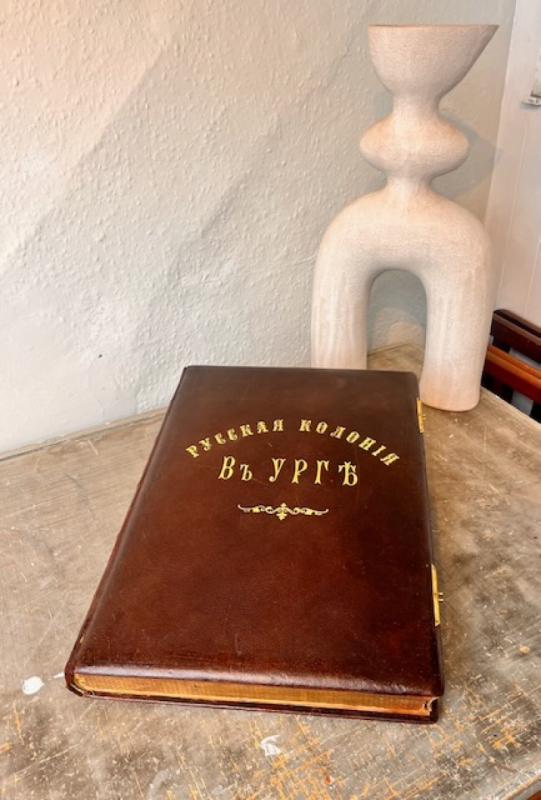
Russian Colony in Urga, Mongolian Presentation Alb...
Voradyev
Reserved
Offered by Roland Belgrave Vintage Photography Ltd
An Account of Constantinople and the Turkish Gover...
ALI KHAN (Navazish)
£3750.00
Offered by Roland Belgrave Vintage Photography Ltd
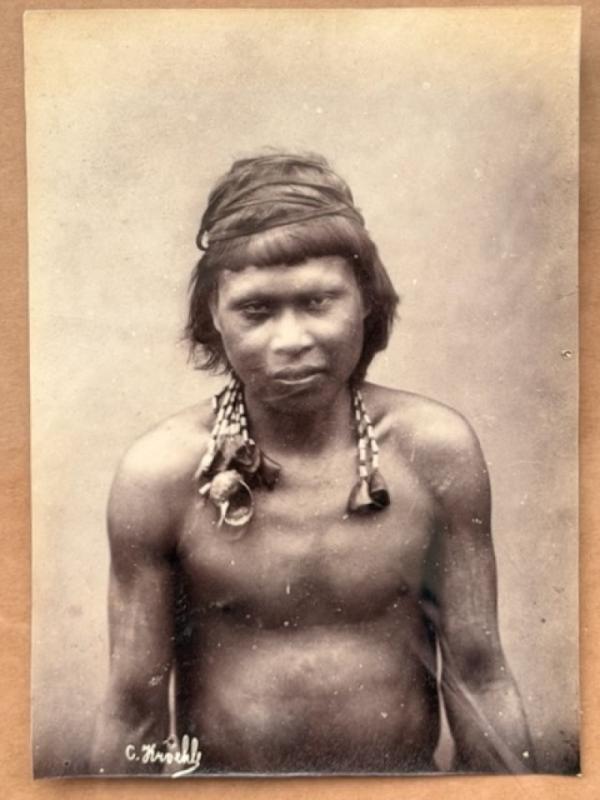
Ethnographic studies of Indigenous people of Peru,...
Charles Kroehle (1867-1902)
£12500.00
Offered by Roland Belgrave Vintage Photography Ltd
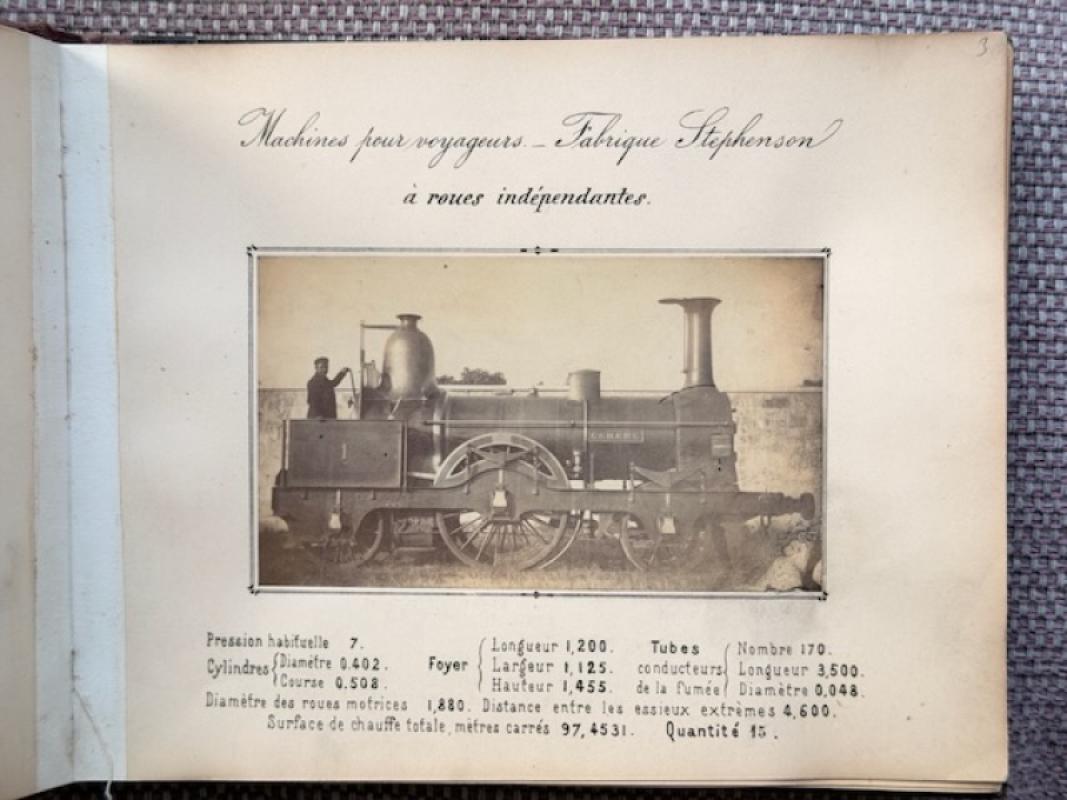
Lombard-Venetian Railway
Photographer unidentified
£6500.00
Offered by Roland Belgrave Vintage Photography Ltd
Friends of the PBFA
For £10 get free entry to our fairs, updates from the PBFA and more.
Please email info@pbfa.org for more information