Original Manuscript List 1780
Book Description
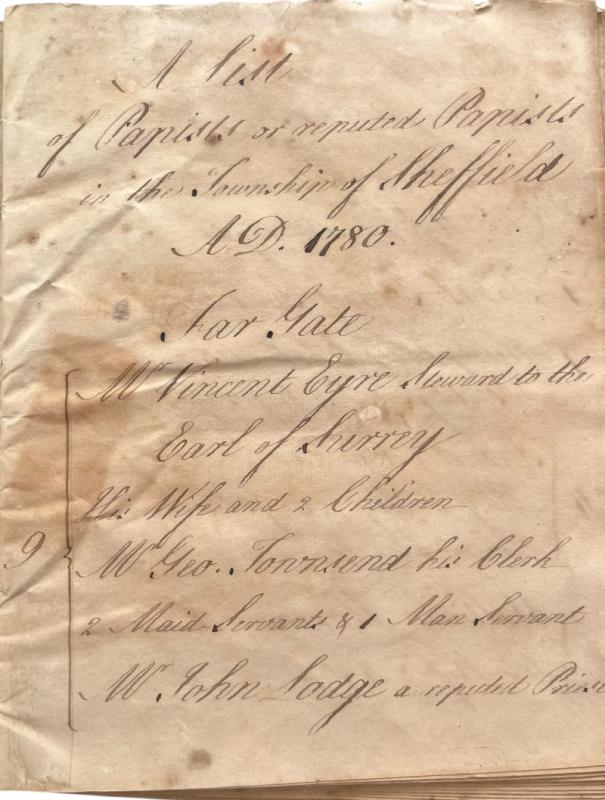
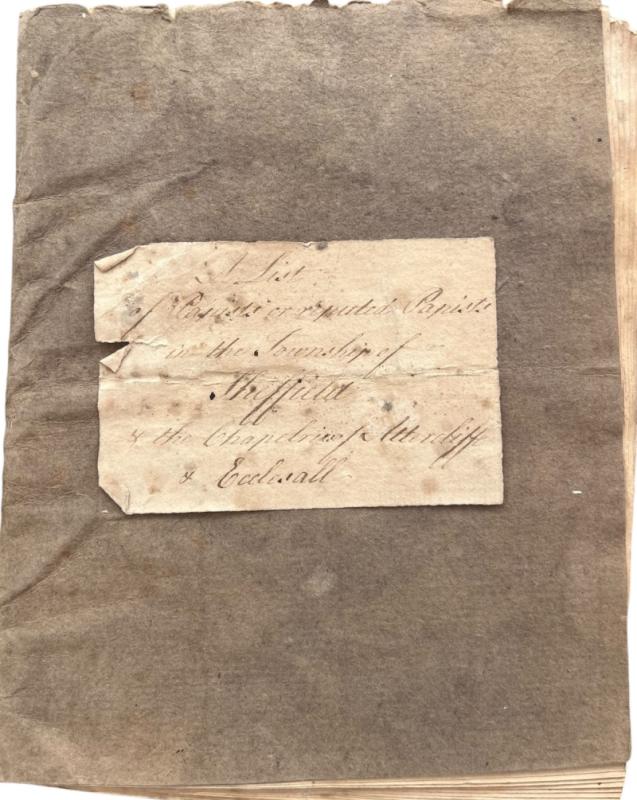
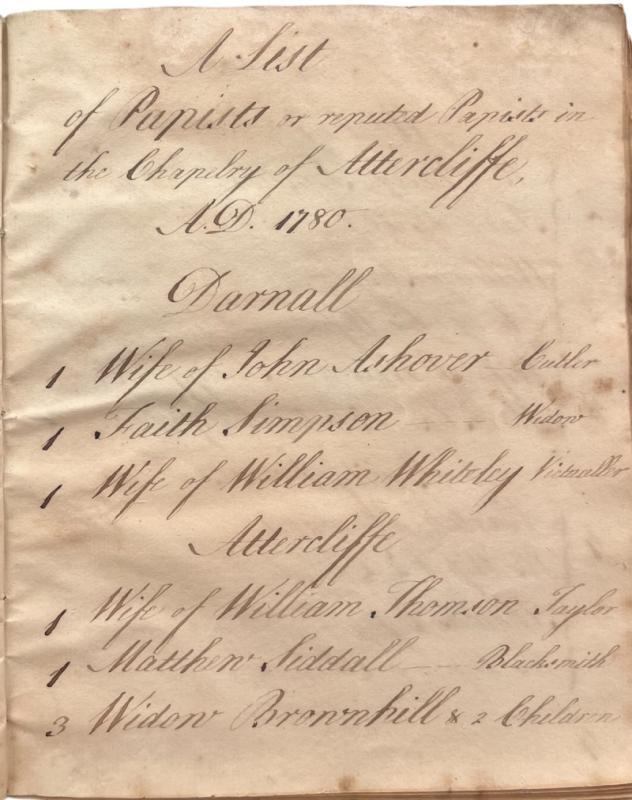
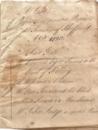
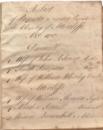
WILKINSON, James Vicar of Sheffield [Manuscript] A list of Papists, or reputed Papists in the Township of Sheffield A.D. 1780. [with] A List of papists or reputed Papists in the Chapelry of Attercliffe A.D. 1780. [with] List of Papists or reputed Papists in the Chapelry of Ecclesall.
[Sheffield: Manuscript], 1780.
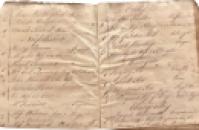
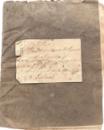
Square 8vo. pp. 28 [7 blank]. On antique laid paper, watermarked GR, in buff coloured wrappers, paper label with title in manuscript.
Dealer Notes
An important primary source for Catholic recusancy in Sheffield compiled by the Vicar of Sheffield James Wilkinson, and the curates of adjoining parishes including Edward Goodman, Curate of Attercliffe.
James Wilkinson [1734 – 1805], was Vicar of Wakefield from 1754 until his death and lived at Broom Hall, the estate which he inherited from his mother, one of the local Jessop family. He was also a King’s Justice of the Peace. He is said to have “administered the Law as he preached the Gospel,” ”with inflexible integrity”. The unfortunate consequence was that in 1791 a mob rioted outside the Parish Church in protest at the vicar’s cruel justice, subsequently proceeding to Broom Hall, where they burned down the vicarage library.
After the English Reformation, there remained a large part of the population loyal to the Catholic church, though this steadily declined over the centuries. However, it was strongest in the north of England, especially Lancashire, Yorkshire and the Lake District. These Recusants refused to attend Church of England services and were monitored, identified, had property confiscated, often fined, and certainly discriminated against in civic life where they were frequently barred from holding public office.
By the latter part of the 18th century recusancy was become less of an issue, though famously Wilkinson refused to let the Methodist John Wesley preach from his pulpit. He obviously thought it necessary to list the local Catholics in his parish and this important document serves as a Catholic census, prior to any formal national universal census, and is therefore especially important.
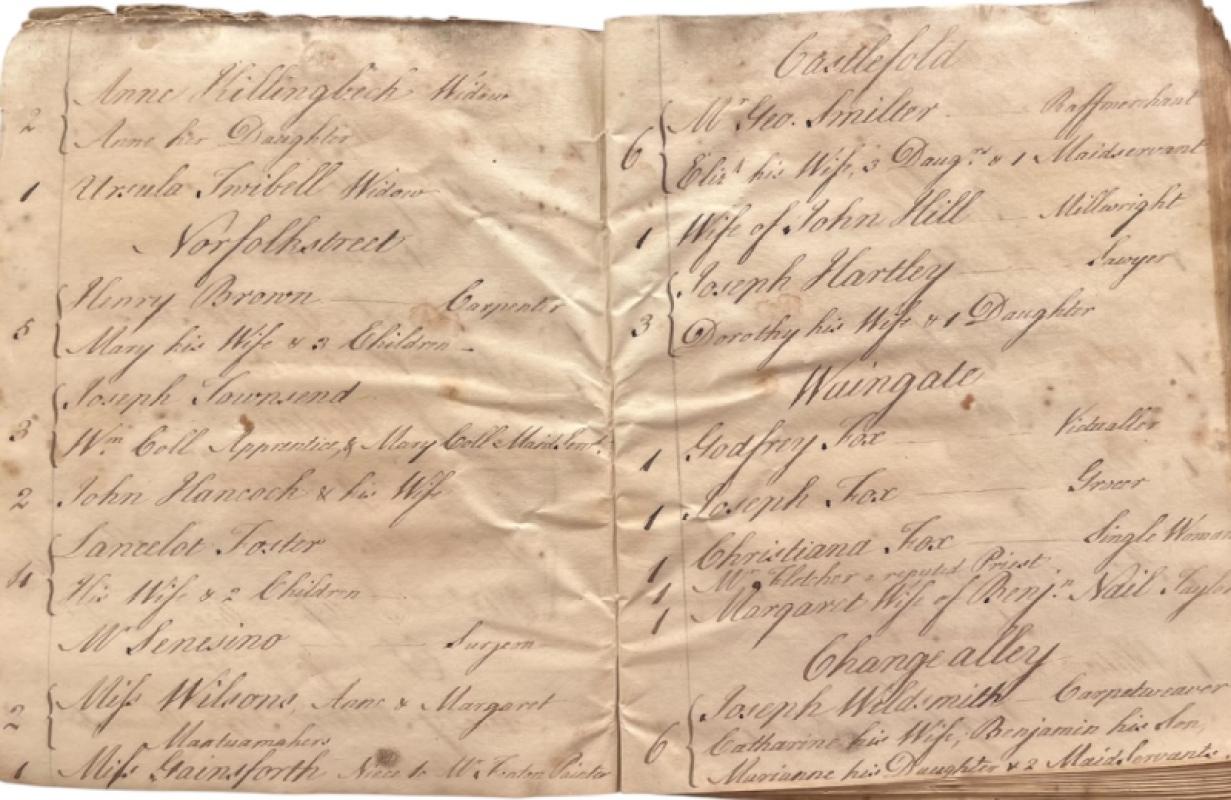
Here he lists, by address or area, the known and suspected Catholics, with name of the head of the household, the number of members of the household, frequently with profession.
In the first instance we have “Mr Vincent Eyre, Steward to the Earl of Surrey, His wife and 2 children, Mr. George Townsend, his Clerk, 2 maid servants and 1 man servant, Mr John Lodge, a reputed Priest.” The Earl of Surrey, was a member of the Howard Family, the Dukes of Norfolk, to this day the most prominent Catholic family in the country, so not surprisingly his trusted employees were likely to follow his religion.
Listed amongst the many professions are shoemaker, tile striker, turner, labourer, schoolmistress, grinder, carpenter, silver plate maker, surgeon, painter, millwright, lawyer, victualler, grocer, carpet weaver, button maker, breeches maker, carrier, cutler, joiner, corn factor, razor smith, raffmerchant, etc. Whist most of these trades and professions are known, or self-explanatory, I did have to look up raffmerchant, who was a dealer trading in timber, especially foreign woods; we have two Catholic raffmerchants in Sheffield at this time.
Amongst the notes we can occasionally see references to individuals being reputed Catholics, or having “repented.” Widow Barker who “teaches a school consisting partly of Papists & partly of Protestant Children.”
In all there are 163 named recusants, with a total of 407 people when including other household members. Of these, there are two reputed priests: John Lodge, in the household of the Earl of Surrey’s steward, and Mr Fletcher residing at Waingate. Seven are marked as having repented.
From 1592 – 1691, the government compiled Recusant Rolls to identify and track those who did not attend Anglican services, but during the 18th century, the persecution and penalties became less common with the passing of Roman Catholic relief acts, culminating in the Catholic Emancipation Act of 1829 which restored civic rights and freedom of worship to Catholics.
This important document is probably the last census of Catholics in Sheffield, and possibly one of the few existing for any area of the country, almost certainly created by the Anglican zeal of James Wilkinson, rather than part of a more extensive local or national survey.
James Wilkinson [1734 – 1805], was Vicar of Wakefield from 1754 until his death and lived at Broom Hall, the estate which he inherited from his mother, one of the local Jessop family. He was also a King’s Justice of the Peace. He is said to have “administered the Law as he preached the Gospel,” ”with inflexible integrity”. The unfortunate consequence was that in 1791 a mob rioted outside the Parish Church in protest at the vicar’s cruel justice, subsequently proceeding to Broom Hall, where they burned down the vicarage library.
After the English Reformation, there remained a large part of the population loyal to the Catholic church, though this steadily declined over the centuries. However, it was strongest in the north of England, especially Lancashire, Yorkshire and the Lake District. These Recusants refused to attend Church of England services and were monitored, identified, had property confiscated, often fined, and certainly discriminated against in civic life where they were frequently barred from holding public office.
By the latter part of the 18th century recusancy was become less of an issue, though famously Wilkinson refused to let the Methodist John Wesley preach from his pulpit. He obviously thought it necessary to list the local Catholics in his parish and this important document serves as a Catholic census, prior to any formal national universal census, and is therefore especially important.
Here he lists, by address or area, the known and suspected Catholics, with name of the head of the household, the number of members of the household, frequently with profession.
In the first instance we have “Mr Vincent Eyre, Steward to the Earl of Surrey, His wife and 2 children, Mr. George Townsend, his Clerk, 2 maid servants and 1 man servant, Mr John Lodge, a reputed Priest.” The Earl of Surrey, was a member of the Howard Family, the Dukes of Norfolk, to this day the most prominent Catholic family in the country, so not surprisingly his trusted employees were likely to follow his religion.
Listed amongst the many professions are shoemaker, tile striker, turner, labourer, schoolmistress, grinder, carpenter, silver plate maker, surgeon, painter, millwright, lawyer, victualler, grocer, carpet weaver, button maker, breeches maker, carrier, cutler, joiner, corn factor, razor smith, raffmerchant, etc. Whist most of these trades and professions are known, or self-explanatory, I did have to look up raffmerchant, who was a dealer trading in timber, especially foreign woods; we have two Catholic raffmerchants in Sheffield at this time.
Amongst the notes we can occasionally see references to individuals being reputed Catholics, or having “repented.” Widow Barker who “teaches a school consisting partly of Papists & partly of Protestant Children.”
In all there are 163 named recusants, with a total of 407 people when including other household members. Of these, there are two reputed priests: John Lodge, in the household of the Earl of Surrey’s steward, and Mr Fletcher residing at Waingate. Seven are marked as having repented.
From 1592 – 1691, the government compiled Recusant Rolls to identify and track those who did not attend Anglican services, but during the 18th century, the persecution and penalties became less common with the passing of Roman Catholic relief acts, culminating in the Catholic Emancipation Act of 1829 which restored civic rights and freedom of worship to Catholics.
This important document is probably the last census of Catholics in Sheffield, and possibly one of the few existing for any area of the country, almost certainly created by the Anglican zeal of James Wilkinson, rather than part of a more extensive local or national survey.
Author
CATHOLIC RECUSANCY IN SHEFFILED
Other books
If you liked the book you've just seen, you might be interested in other books from the same dealer below.
18 ORIGINAL UNPUBLISHED BOOK ILLUSTRATIONS
CECIL BEATON
£25000.00
Offered by Michael S Kemp Bookseller
Titus Groan; Gormenghast; Titus Alone.
MERVYN PEAKE
Eyre and Spottiswoode,
£2250.00
Offered by Michael S Kemp Bookseller
Friends of the PBFA
For £10 get free entry to our fairs, updates from the PBFA and more.
Please email info@pbfa.org for more information